


Antminer A3 vs D7: efficiency, power and ROI comparison
Views: 0 Author: Site Editor Publish Time: 2026-06-28 Origin: Site


Evaluating two distinctly different classes of Bitmain hardware can dictate the long-term success or sudden failure of a crypto mining operation. When you examine the antminer a3 vs d7, you face a complex decision scenario. Choosing between the Antminer A3 and the Antminer D7 is not a standard hardware upgrade choice. It requires selecting between entirely different cryptographic algorithms. You must choose between distinct target assets like Siacoin and Dash. You also commit to vastly different operational scales. Making the wrong choice can lock you into obsolete, unprofitable hardware or severely overwhelm your facility's electrical capacity. We will establish a clear baseline for comparison between these two units. You will learn about their respective hardware longevity, power draw metrics, and strict facility requirements. We will explore realistic paths to ROI in current market conditions. This ensures you can scale your operations with confidence and precision.
Key Takeaways
Algorithm Divide: The Antminer A3 mines the Blake2b algorithm (Siacoin), while the Antminer D7 targets the X11 algorithm (Dash). They are not interchangeable.
Power Disparity: The D7 requires enterprise-grade electrical infrastructure (~3148W) compared to the A3’s lighter footprint (~1275W).
Investment Profile: The A3 represents a low-CapEx, high-OpEx-risk legacy play; the D7 represents a modern, high-yield, high-CapEx enterprise investment.
ROI Dependency: Profitability for either ASIC miner relies heavily on sourcing industrial electrical rates (typically under $0.08/kWh).
Framing the Investment: Algorithm and Asset Allocation
You face a complex business problem when evaluating disparate mining hardware. You must align your hardware capability with your broader treasury strategy and asset conviction. When you select a mining rig, you simultaneously select its underlying asset. You acquire an engine specifically built to accumulate a single type of token. Your success relies entirely on the future market performance of that chosen token.
Antminer A3 (Blake2b / Siacoin)
The Antminer A3 focuses exclusively on the Blake2b algorithm. This machine specifically mines Siacoin (SC), a token powering decentralized cloud storage networks. You must evaluate the market viability of Siacoin before deploying this hardware. You need to assess whether the decentralized storage sector has enough adoption to drive the token's value upward. You should also analyze network difficulty trends. As more miners join the Blake2b network, your slice of the block rewards shrinks. You must study the block reward structures for the Blake2b network to forecast your potential token accumulation accurately over the next several years.
Antminer D7 (X11 / Dash)
Conversely, the antminer d7 tackles the X11 algorithm. This unit targets Dash, a prominent digital currency focused on payments and privacy. You need to evaluate the market depth and liquidity of Dash. High liquidity ensures you can easily sell your mined coins to cover operational expenses without suffering severe market slippage. You must analyze X11 network hashrate stability. Dash attracts significant institutional mining competition. You will compete against large-scale farms deploying vast fleets of modern hardware. You need strong conviction in the long-term utility of the Dash network.
Strategic Takeaway: You are not just buying a piece of hardware. You are taking a definitive, long-term position on the underlying network's tokenomics. Your mining operation functions as a continuous dollar-cost averaging strategy into either Siacoin or Dash. Choose the asset you believe will survive future market cycles.
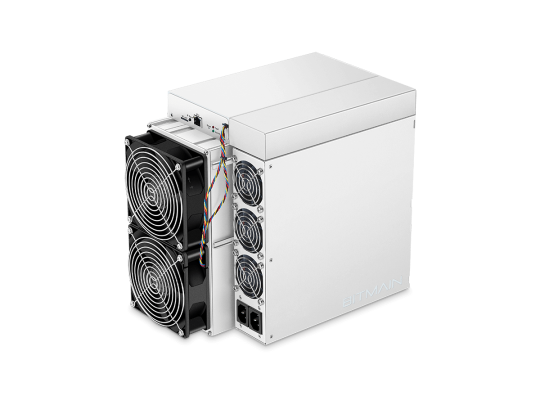
Antminer A3 vs D7: Hardware Specifications and Power Efficiency
Understanding the raw specifications of each unit reveals their vastly different engineering profiles. You cannot compare them directly as competitors on the same network. Instead, you must measure how efficiently they dominate their respective algorithms.
Throughput and Hashrate
Throughput defines your earning potential. The A3 delivers roughly 815 GH/s (gigahashes per second). You must weigh this capability against the current Blake2b difficulty. Because the A3 is an older generation unit, its 815 GH/s represents a smaller percentage of the total network hashrate today than it did at launch. The D7, however, provides a massive 1286 GH/s (often formatted as 1.286 TH/s for X11 metrics). It maintains sheer dominance in the X11 space. A single D7 can replace racks of older X11 equipment, consolidating immense hashing power into a single form factor.
Power Consumption and Efficiency
Power consumption separates these machines drastically. We compare the 1275W draw of the A3 against the hefty 3148W requirement of the D7. To determine true electrical efficiency, we calculate joules per gigahash (J/GH) for each unit. The A3 operates near 1.56 J/GH for the Blake2b algorithm. The D7 operates around 2.44 J/GH for the X11 algorithm. Because the algorithms require different mathematical processing intensities, you cannot declare one strictly "more efficient" than the other overall. You must view these efficiency ratings relative to other machines on the same specific network.
Hardware Lifespan
Hardware longevity remains a critical risk factor. Bitmain released the A3 in 2018. It exists as legacy hardware today. You face a significantly higher risk of physical degradation, thermal paste drying, and rapid obsolescence. Replacement control boards and fan shrouds become harder to source. The D7 launched in 2021 as a modern flagship. It offers vastly better component availability. You benefit from modern control boards, refined heat sinks, and an extended operational runway. It will remain relevant on the X11 network much longer.
Specification Comparison Table
Specification | Antminer A3 | Antminer D7 |
|---|---|---|
Target Algorithm | Blake2b | X11 |
Primary Coin | Siacoin (SC) | Dash (DASH) |
Release Year | 2018 (Legacy) | 2021 (Modern) |
Hashrate | ~815 GH/s | ~1286 GH/s (1.286 TH/s) |
Power Draw | ~1275 Watts | ~3148 Watts |
Efficiency Metric | ~1.56 J/GH (Blake2b) | ~2.44 J/GH (X11) |
Calculating ROI: Upfront Costs vs. Long-Term Yield
Calculating your return on investment requires navigating complex financial variables. You must balance the initial shock of capital deployment against the slow, steady bleed of daily operational costs.
Capital Expenditure (CapEx)
Your initial hurdle starts with capital expenditure. You will navigate secondary market pricing for the antminer a3. Because it is legacy hardware, sellers often heavily discount these units. This presents a low barrier to entry. You risk very little upfront capital. In stark contrast, you face premium pricing models for the Antminer D7. You usually source these powerful units from verified distributors or premium secondary sellers. The initial capital requirement demands a robust budget and a serious commitment to the venture.
Operational Expenditure (OpEx) Realities
Operational realities determine your daily survival. We must use transparent assumptions here. Your ROI calculations must strictly factor in $0.05 to $0.10/kWh electricity tiers. The A3 suffers from lower relative network efficiency. This severely impacts its break-even point. In regions with power costs exceeding $0.08/kWh, the A3 frequently operates at a daily loss. You pay more to the utility company than you earn in Siacoin. The D7, utilizing highly optimized modern chips, maintains a wider profit margin. It continues generating positive yield even at slightly higher electricity tiers.
Volatility and Yield Forecasting
Volatility complicates all yield forecasting. Coin price fluctuations disproportionately impact the profitability of legacy hardware. An older asic miner like the A3 struggles immediately when token prices drop. The margin evaporates. Highly efficient hardware like the D7 weathers these sudden market storms much better. It can absorb a 20% drop in Dash price and remain cash-flow positive. You must also factor in external costs. Mining pool fees typically consume 1% to 2% of your gross yield. You may also incur firmware optimization costs if you choose to flash aftermarket software to improve hardware tuning.
Infrastructure Requirements and Implementation Risks
Bringing massive computational power into a physical space introduces serious engineering challenges. You cannot simply plug commercial hashing equipment into a residential wall and walk away. You must plan for intense electrical loads, massive heat generation, and disruptive acoustic output.
Electrical Capacity and Compliance
Electrical capacity and strict code compliance govern your deployment safely. The D7 pulls roughly 3148W. It requires dedicated 220V+ circuits to function. You absolutely cannot run it on standard residential 110V outlets. Electrical safety standards, such as the NEC 80% rule for continuous loads, dictate your breaker sizing. A single D7 drawing over 14 amps at 220V requires a 20-amp breaker minimum. You need industrial Power Distribution Units (PDUs) rated for heavy continuous loads when scaling either crypto miner. The A3, at 1275W, offers slightly more flexibility, allowing you to run multiple units on a standard 30-amp 220V PDU.
Thermal Management and Airflow
Thermal management requires precise mechanical engineering. Heat dissipation realities are intense and unforgiving. You must manage roughly 10,700 BTUs per hour for a single D7. To put this in perspective, running one D7 equals running a powerful commercial space heater non-stop. Your facility needs exceptionally high CFM (Cubic Feet per Minute) ratings for intake and exhaust. Stagnant air will cause immediate thermal throttling and potential chip failure.
Implementing successful cooling in farm deployments involves strict adherence to airflow best practices:
Hot Aisle/Cold Aisle Containment: Physically separate the cool intake air from the superheated exhaust air using sealed barriers.
High-Velocity Intake Louvers: Install filtered, high-capacity louvers to ensure negative pressure systems pull enough fresh air into the facility.
Variable Speed Exhaust Fans: Utilize large-scale exhaust fans tied to temperature sensors. They speed up during peak heat events and slow down during cooler nights to save power.
Regular Filter Maintenance: Change intake filters monthly. Dust accumulation destroys heat sink efficiency and drastically shortens hardware lifespans.
Noise Constraints
Acoustic output dictates your facility location instantly. High-RPM industrial fans cool these units. They generate immense noise. Acoustic profiles routinely hit 70 to 80+ decibels at close range. The noise resembles a loud vacuum cleaner or a jet engine spooling up. This reality completely rules out standard residential or garage deployments. You will quickly face noise complaints from neighbors. You must place these units in sound-dampened industrial facilities or remote locations where acoustic pollution presents no issues.
Final Decision Framework: Structuring Your Mining Setup
Choosing between these two models forces you to match your physical infrastructure with your risk tolerance. The right decision depends entirely on your environment and your ultimate financial goals.
When to Deploy the Antminer A3
Deploying legacy hardware makes sense only under highly specific conditions. You should consider the A3 if you meet these criteria:
You have access to stranded, free, or near-free energy (e.g., excess solar, flared gas, or subsidized industrial power).
You hold high conviction in the future price of Siacoin but possess a very low initial budget for hardware acquisition.
You are building a test environment. The A3 provides cheap hands-on experience for testing cooling airflow, network configurations, and PDU balancing before scaling to expensive modern units.
When to Deploy the Antminer D7
Deploying modern flagship hardware fits a completely different operational profile. You should invest in the D7 if you meet these criteria:
You run a commercial-grade facility. You already have established high-voltage infrastructure capable of handling massive amperage loads safely.
You require maximum yield per rack unit. Space is premium, and you need predictable, high-density ROI against the Dash network difficulty.
You want enterprise reliability. You value the stability of modern components and the availability of standard manufacturer or distributor support channels.
Next Steps
You must take specific actions before making any purchase. First, audit your current facility power limits. Note the total amperage available on your main service panel. Second, input live network difficulty metrics and your exact local kilowatt-hour rates into an ASIC calculator. Do not use default assumptions. Use your precise localized data to build a reliable profitability model.
Operational Decision Matrix
Operational Factor | Favorable for Antminer A3 | Favorable for Antminer D7 |
|---|---|---|
Initial Budget Available | Low (Under $1,000 range) | High (Premium Capital required) |
Electricity Rate | $0.00 - $0.03 / kWh | $0.04 - $0.08 / kWh |
Target Asset Strategy | Speculative Altcoin (Siacoin) | Established Altcoin (Dash) |
Facility Type | Experimental / DIY / Stranded Energy | Commercial Data Center / Industrial Farm |
Risk Tolerance | High (OpEx risk, hardware failure risk) | Low (Stable operation, manufacturer support) |
Conclusion
The debate surrounding these two units is ultimately resolved by your infrastructure capacity and your asset choice. It is not determined by hardware specifications alone. Comparing Blake2b legacy hardware to X11 flagship hardware highlights the vast differences in deployment strategies. You must build your operation around the reality of your power costs and your token convictions.
We reiterate that the D7 represents the objective choice for serious, scaled X11 operations. It delivers modern efficiency, massive throughput, and long-term viability. Conversely, the A3 remains a niche, high-risk play. It suits Blake2b enthusiasts who secure ultra-cheap power and possess a high tolerance for legacy hardware maintenance.
Take proactive steps today. Calculate your exact electricity overhead down to the penny. Assess your facility's cooling capabilities honestly. Finally, consult a verified hardware distributor for current batch availability and precise pricing models before committing your capital.
FAQ
Q: Can the Antminer D7 mine Bitcoin?
A: No. The Antminer D7 cannot mine Bitcoin. It specifically targets the X11 algorithm used by Dash. Bitcoin relies on the SHA-256 cryptographic algorithm. An X11 ASIC miner features hardcoded microchips engineered solely to solve X11 mathematical equations. It lacks the physical architecture to process SHA-256 data, making Bitcoin mining impossible on this machine.
Q: Is the Antminer A3 still profitable today?
A: Profitability depends almost entirely on your electricity rates. Given average global electricity costs, the A3 frequently operates at a loss today. It typically only achieves profitability if you secure stranded or free energy and if the Siacoin market experiences a strong upward price trend to offset the low hardware efficiency.
Q: What kind of outlet is required for an Antminer D7?
A: You must utilize 220V-240V infrastructure. The D7 draws nearly 3150W and simply cannot operate on a standard 110V residential wall outlet. Commercial deployments typically rely on heavy-duty C13 or C19 plug types connected directly to metered, hardwired PDUs (Power Distribution Units) rated for high-amperage continuous electrical loads.
Q: Can I switch the algorithm on my crypto miner?
A: No. ASICs are Application-Specific Integrated Circuits. Their internal hardware is physically hardcoded at the silicon level to execute one specific algorithm at maximum possible efficiency. Unlike flexible GPU mining rigs, you cannot reprogram an X11 machine to suddenly mine Blake2b or SHA-256 coins through a software update.



Shenzhen OB Technology Co., Ltd. We are leading manufacturer in China which specialized electronic products supplying for 10 years.
SHOP
Graphics Cardadaphics
SUPPORT
Subscribe to receive updates, access to exclusive deals, and more.
