


Antminer D7 Mining Equipment: High Hashrate Bitcoin Miner
Views: 0 Author: Site Editor Publish Time: 2026-06-15 Origin: Site


Commercial cryptocurrency mining operates in a highly competitive, high-stakes environment. Capital expenditure and operating expenses dictate your survival. You need reliable hardware to remain profitable. Enter the Antminer D7. Bitmain engineered it as a powerhouse within the ASIC space. It dominates specific cryptographic algorithms effortlessly.
We must address a common industry confusion immediately. Buyers frequently categorize it alongside bitcoin ASIC machine queries. However, the D7 cannot mine Bitcoin. Bitmain designed it exclusively for the X11 algorithm. It targets the Dash network directly. It does not use the SHA-256 algorithm.
This evaluation breaks down the true performance metrics of the D7. We explore its electrical requirements, thermal demands, and ROI frameworks. Institutional facilities and serious retail miners can leverage this data. It helps you make a highly informed deployment decision.
Key Takeaways
True Application: The D7 antminer is an X11 algorithm specialist (Dash coin), requiring a pivot to an S19 or S21 series if purely seeking a Bitcoin ASIC machine.
Performance Baseline: Delivers a formidable 1286 GH/s hashrate, cementing its status as a top-tier high hashrate miner in the altcoin sector.
Power Reality: Consumes roughly 3148W, demanding specialized 220V+ electrical infrastructure and aggressive thermal management.
Evaluation Criteria: Acquisition viability relies strictly on sub-$0.08/kWh power agreements and careful modeling of X11 network difficulty.
1. Hardware Specifications and Baseline Performance
You need objective performance data before deploying capital. Manufacturer claims often represent ideal laboratory conditions. We evaluate what the machine actually delivers in a working data center.
The unit delivers an impressive 1286 GH/s hashrate output. This processing power secures its dominance in the X11 ecosystem. It scales aggressively against current network difficulty levels. You can consider it a premium high hashrate miner. It processes hashing functions fast enough to yield consistent block rewards.
We must analyze its power efficiency profile next. The unit consumes roughly 3148W during normal operation. You can calculate the Joules per Terahash equivalent to understand its efficiency. This calculation yields approximately 2.44 J/GH. This metric establishes a strong baseline efficiency for the X11 algorithm. It outperforms older generations by a wide margin.
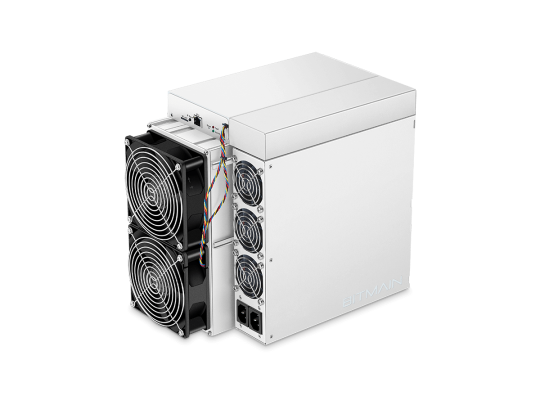
The form factor follows Bitmain’s proven 7-series architecture. It measures 400mm by 195mm by 290mm. It weighs approximately 14.2 kg. The physical build uses premium component quality throughout. Bitmain includes a highly stable control board. They use robust hashboards to endure continuous high-heat environments.
2. Profitability Frameworks and ROI Assumptions
You must frame your mining operation as a strict business problem. Evidence-oriented financial modeling ensures long-term viability. Relying on static profit claims leads to massive financial errors.
Revenue variables fluctuate daily in cryptocurrency mining. You model daily yield using current Dash block rewards. You must also input real-time network difficulty. Dash market prices change rapidly. You avoid using verifiable-to-expire fiat profit claims. Instead, you model the exact coin yield over specific timeframes.
Operating expense modeling strictly relies on your electricity costs. Power agreements dictate your baseline profitability. We provide a sensitivity analysis matrix below. It illustrates how different power rates impact monthly OPEX.
Electricity Rate ($/kWh) | Daily Power Cost | Monthly OPEX (30 Days) | Viability Rating |
|---|---|---|---|
$0.04 | $3.02 | $90.60 | Excellent |
$0.06 | $4.53 | $135.90 | Good |
$0.08 | $6.04 | $181.20 | Marginal |
$0.10+ | $7.55+ | $226.50+ | High Risk |
You calculate the payback period using a specific ROI formula. Divide your total hardware and setup costs by your net daily profit. Net daily profit equals daily revenue minus daily OPEX. You must factor in potential hardware depreciation. We also recommend accounting for typical pool fees. They usually range from 1% to 2% of your gross revenue.
We maintain a skeptical viewpoint on static profitability calculators. They fail entirely at predicting the future. They ignore rising network difficulty. They do not account for sudden price volatility. Dynamic modeling remains your safest evaluation tool.
3. Implementation Realities: Infrastructure, Cooling, and Noise
Deployment involves several hidden costs. Experience-driven insights reveal the true demands of commercial hardware. You cannot treat this machine like standard consumer electronics.
Strict electrical requirements dictate your facility setup. You cannot plug this crypto mining hardware into a standard 110V residential outlet. It will fail instantly. It might even cause a fire hazard. The unit strictly requires a 220V-240V power supply. You need dedicated 20-amp circuits. Professional operators use metered Power Distribution Units for optimal safety.
Aggressive thermal management remains a non-negotiable requirement. The unit exhausts over 3000W of pure heat. You must calculate accurate Cubic Feet per Minute airflow requirements. The fans run at high speeds to clear hot air. Many operators rely on standard air-cooling in warehouse environments. Others evaluate immersion cooling viability. Immersion setups reduce hardware wear but require massive upfront capital.
The acoustic profile creates serious placement limitations. The machine produces a noise level exceeding 75 decibels. It sounds exactly like a loud, industrial vacuum cleaner. This poses a strict limitation for residential operators. You cannot run it inside a normal house. It serves as a necessary planning metric for data center airflow design. You need sound-dampening materials for commercial builds.
4. Antminer D7 vs. Alternative Crypto Mining Hardware
You need logical shortlisting criteria before purchasing. We categorize alternative solutions to justify your investment. The market offers several distinct hardware paths.
We first look at intra-algorithm competition. You compare the D7 against legacy X11 miners. Older models include the Antminer D5 or the Innosilicon A320. The D7 antminer offers a completely different class of performance. It justifies the upgrade cycle through raw efficiency. Legacy machines simply cannot compete with current network difficulty. They operate at a loss under standard power rates.
We must address cross-algorithm alternatives. Many buyers enter the market searching for pure BTC hardware. They accidentally look at Dash miners. We briefly map out how the capital required compares across ecosystems. You might spend similar capital acquiring an Antminer S19j Pro. You could also buy a Whatsminer M30S. Those machines mine pure Bitcoin.
Below is a simplified chart comparing hardware categories:
Model | Algorithm | Target Coin | Primary Advantage |
|---|---|---|---|
Antminer D7 | X11 | Dash | Massive altcoin yield |
Antminer S19j Pro | SHA-256 | Bitcoin | Market stability |
Antminer D5 | X11 | Dash | Cheap legacy entry |
You must finally evaluate your inherent opportunity cost. You take on risk by deploying capital into X11 hardware. You could simply acquire the underlying Dash asset directly. Hardware yields daily tokens regardless of bear markets. Direct asset acquisition relies purely on market appreciation. Both strategies carry distinct financial risks.
5. Sourcing, Warranties, and Supply Chain Risk
Bottom-of-funnel purchasing presents numerous supply chain risks. You must prioritize trustworthiness when sending large wire transfers. The mining industry harbors several fraudulent operators.
Vendor verification represents your first line of defense. You must know how to vet authorized Bitmain distributors. You distinguish them from questionable third-party resellers. Watch out for red flags on fraudulent storefronts. These include massive discounts, broken English, and missing physical addresses. Scammers often demand irreversible crypto payments without offering formal invoices.
You must understand warranty limitations before you buy. Bitmain offers standard warranty terms for brand new units. These typically cover the machine for 6 to 12 months. Certain operational mistakes immediately void this protection.
Overclocking the firmware beyond factory settings.
Using improper voltage on the power supply unit.
Operating the machine in high-humidity environments.
Removing the original warranty stickers.
You integrate tariffs and logistics into your final calculations. Securing reliable antminer d7 mining equipment requires international shipping. You factor in heavy air-freight costs. You calculate import duties and customs clearing fees. You note the exact lead times. Spot batches ship immediately. Futures batches take months to arrive. Time delays directly impact your initial profitability phase.
Conclusion
The Antminer D7 operates as a highly efficient, specialized machine. It yields incredibly strong performance for the X11 algorithm. However, it succeeds only for operators with optimized power costs. You also need a strongly bullish outlook on the Dash ecosystem. It cannot serve as a generalized mining tool.
You should follow these exact next steps before purchasing:
Audit your facility’s electrical capacity and ensure you have dedicated 220V power circuits.
Run a dynamic profitability calculation using real-time Dash network difficulty metrics.
Request formal, itemized quotes from at least two verified distributors to secure a fair baseline price.
FAQ
Q: Can the Antminer D7 mine Bitcoin?
A: No. It is designed specifically for the X11 algorithm to mine Dash. Bitcoin requires specialized SHA-256 ASIC miners. Attempting to mine Bitcoin with this unit will not work.
Q: What is the standard power requirement for the D7?
A: It requires a dedicated 220V-240V power supply. Attempting to run it on a standard 110V residential outlet will fail. It will potentially damage the power supply unit entirely.
Q: How long does it take to achieve ROI on the D7?
A: ROI remains highly variable. It depends entirely on your specific electricity cost, the current Dash market price, and overall network difficulty. Dynamic modeling is required for accurate estimates.
Q: Is the D7 suitable for home mining?
A: Generally no. It produces a high decibel output exceeding 75dB. It also generates immense industrial heat. You can only run it at home if you utilize a heavily soundproofed, climate-controlled outbuilding.



Shenzhen OB Technology Co., Ltd. We are leading manufacturer in China which specialized electronic products supplying for 10 years.
SHOP
Graphics Cardadaphics
SUPPORT
Subscribe to receive updates, access to exclusive deals, and more.
