


Bitcoin ASIC Miner Wholesale: Bitmain Antminer Mining Equipment Supplier
Views: 0 Author: Site Editor Publish Time: 2026-06-08 Origin: Site


Procuring ASIC hardware in bulk represents a high-stakes capital expenditure for any serious operation. Even minor pricing discrepancies can drastically impact your long-term profitability. A few dollars saved upfront might cost you thousands later in maintenance. Today, we observe a massive shift from retail purchasing to institutional scaling. Fluctuating market cycles demand highly reliable supply chains to survive. Institutional farm operators cannot afford to rely on fragmented retail channels. They need direct, verified access to industrial-grade equipment. Successfully scaling an enterprise mining operation requires careful strategy and strict execution. You must balance base hardware efficiency with strict supplier reliability. You also need transparent logistics and verifiable factory warranties. Mastering these elements ensures your fleet deploys smoothly and stays profitable. We will explore how to secure premium hardware, verify vendor legitimacy, manage complex logistics, and protect your hardware investment across varying market cycles.
Key Takeaways
Securing bitcoin asic miner wholesale pricing requires vetting suppliers for verifiable corporate entities, escrow options, and transparent RMA (Return Merchandise Authorization) protocols.
Selecting the right Bitmain Antminer model depends entirely on your facility's power capacity, cooling infrastructure (air vs. hydro/immersion), and target power rate ($/kWh).
Reliable suppliers provide transparent serial number tracking and honor manufacturer warranties to minimize downtime risks.
The Strategic Advantage of Sourcing Bitcoin ASIC Miner Wholesale
Retail markups heavily erode profit margins for mid-to-large scale farm operators. Buying units individually drives up shipping fees. It also fragments your deployment timeline. You end up managing scattered delivery schedules. Sourcing individually creates unnecessary administrative burdens. You lose precious capital trying to build a fleet one machine at a time. Enterprise operators must shift their strategy toward institutional procurement.
Moving to batch-pricing based on minimum order quantities (MOQ) changes your financial trajectory. Suppliers offer substantial volume tier pricing. This approach drastically lowers your per-unit acquisition cost. You secure better margins immediately upon deployment. Volume purchasing allows you to negotiate favorable shipping rates. It also opens doors to dedicated account management. You secure a direct line to critical inventory data before retail buyers see it.
Batch uniformity serves as another crucial success criteria. Managing a farm requires predictability. Deploying a fleet of identical machines simplifies everything. It streamlines your firmware management. Maintenance becomes entirely predictable. Facility load balancing becomes easier to calculate. You need a reliable crypto mining rig deployment to maintain environmental stability. Mixing different models complicates your electrical engineering requirements. It also forces your technicians to learn multiple repair protocols.
Finally, priority allocation secures your market advantage. Network difficulty always adjusts upward. You must deploy current-generation models quickly. Delaying deployment erodes their competitive edge. Securing bitcoin asic miner wholesale deals guarantees faster access to newly released machines. You get your hardware spinning while the network difficulty remains favorable.
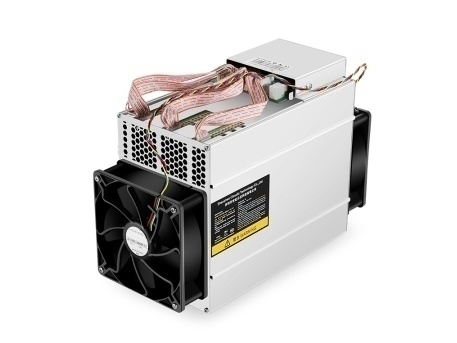
Evaluating Bitmain Antminer Models for Enterprise Scaling
Choosing the right equipment determines your survival during bear markets. You must evaluate efficiency metrics alongside cooling infrastructure. Energy efficiency directly impacts your daily margins. We measure this efficiency in Joules per Terahash (J/TH). Lower numbers indicate better efficiency. You must match the hardware to your specific power agreement.
We break down solution categories into two main groups. First, you have maximum efficiency models. The latest generation units exemplify this tier. These suit operations facing higher power costs. They offer maximum network longevity. They generate profitable yields even when difficulty spikes. Second, you have cost-to-hashrate models. Previous generation units fit this category perfectly. They suit facilities enjoying ultra-low power costs. You prioritize lower upfront capital expenditure here. You sacrifice some energy efficiency to acquire more total hash rate.
Cooling infrastructure introduces hard physical constraints. You must align your purchasing with your facility design. Air-cooled units dominate legacy farms. They remain easy to deploy and repair. Hydro-cooled and immersion-ready units offer superior performance. They run quieter and maintain steady chip temperatures. However, liquid cooling demands massive facility retrofits. You must weigh retrofit costs against extended operational lifespans. We rely on top-tier ASIC mining hardware to maximize uptime across any cooling setup.
You must perform an evidence-oriented reality check before ordering. Hardware performance remains static. Your machine will always hash at its rated speed. However, network difficulty remains highly dynamic. You should never model returns based on static network conditions. Always stress-test your projections against rising difficulty.
Model Category | Target Efficiency (J/TH) | Ideal Power Cost | Cooling Infrastructure |
|---|---|---|---|
Current Generation | Under 20 J/TH | Moderate to High | Air / Hydro / Immersion |
Previous Generation | 21 - 30 J/TH | Ultra-Low | Primarily Air |
Legacy Models | 30+ J/TH | Free / Stranded Energy | Air |
How to Vet a Legitimate Bitcoin Miner Supplier
The secondary hardware market presents numerous scam risks. Unauthorized brokers frequently vanish after receiving payments. You must define strict criteria for supplier shortlisting. Trust and verified experience matter more than a slight discount. A genuine bitcoin miner supplier values long-term partnerships over quick sales. They understand that transparency builds institutional trust.
You must watch for distinct red flags during your vetting process. Avoid suppliers demanding full upfront payment exclusively via non-traceable cryptocurrency. Legitimate businesses offer traditional financial rails. Be highly skeptical of prices sitting significantly below manufacturer base pricing. If quotes look too good to be true, they are usually false. A lack of physical business registries should immediately disqualify a vendor. You should also check third-party verified reviews on industry platforms.
Conversely, look for strong green flags that indicate professionalism. Legitimate vendors accept bank wires and standard letters of credit. They often provide trusted escrow services for large orders. They offer transparent video verification before boxing your units. They will show you serial numbers and hash board testing live. They provide clear Service Level Agreements (SLAs) for dead-on-arrival units. They take responsibility for their supply chain integrity.
Best Practices for Supplier Vetting
Request corporate registration documents and verify them against local government databases.
Demand video proof of life for the hardware showing today's date and your company name.
Utilize multi-signature escrow services for transactions exceeding six figures.
Cross-reference the supplier's name on known community scam databases.
Implementation Risks: Logistics, Tariffs, and Colocation
Buying the hardware only represents 40% of the battle. The remaining 60% involves complex implementation realities. Supply chain friction can derail your entire deployment timeline. You must actively manage the logistics to protect your capital. Leaving freight to chance guarantees delays.
Customs clearance introduces massive financial variables. Import duties drastically alter your financial models. For example, US buyers face Section 301 tariffs when importing electronics from China. These tariffs add significant percentage points to your landed costs. Freight forwarding delays happen frequently at major ports. You must prepare meticulous documentation for customs agents. Incomplete paperwork leads to impounded containers. You need experienced brokers handling your entry paperwork.
Downtime directly translates to lost revenue. Every day a machine spends in transit is lost hashing potential. You lose money while units sit in customs warehouses. Because of this, you should heavily value suppliers maintaining localized inventory. Stock held in US, UAE, or EU warehouses bypasses international shipping delays entirely. You pay a slight premium for local stock, but you gain immediate hashing revenue.
Hosting integration adds another layer of complexity. Many buyers lack their own physical infrastructure. They rely on third-party data centers. You must align delivery schedules closely with colocation facility readiness. If your machines arrive before your racks receive power, you bleed capital. If your racks sit empty waiting for delayed machines, you pay for unused electricity.
Phases of Successful Deployment
Facility Readiness Audit: Confirm power availability, rack space, and network drops before placing an order.
Freight Coordination: Assign a dedicated customs broker to handle import duties and clearance paperwork.
Receiving Protocol: Establish a clear process for inspecting pallets, logging serial numbers, and checking for physical damage.
Rack and Stack: Deploy machines systematically, ensuring proper hot/cold aisle containment and network configuration.
Warranty Management and RMA Protocols
Hardware failure rates are inevitable at scale. These machines run continuously in high-heat environments. You must plan for component degradation across the equipment lifecycle. Understanding the warranty process saves you from extended downtime. Failing to track warranty windows costs operators thousands of dollars annually.
You need to grasp standard Bitmain antminer warranty realities. The manufacturer typically provides a 12-month warranty. Crucially, this period begins on the date of factory dispatch. It does not start on your delivery date. You lose warranty days during transit. If shipping takes thirty days, you only enjoy eleven months of actual coverage. You must log every serial number and dispatch date in your management software.
Premium suppliers provide vital support during failures. They assist heavily with the Return Merchandise Authorization process. They offer guidance on diagnosing failed components accurately. They help you extract specific control boards or hash boards. You send these small parts to authorized repair centers locally. This prevents you from shipping entire heavy units back overseas. Shipping an entire machine costs hundreds of dollars. Shipping a single hash board costs very little.
Common RMA Mistakes
Failing to register the equipment serial numbers immediately upon arrival.
Voiding the warranty by removing factory seals or using custom firmware prematurely.
Shipping dirty or improperly packaged hash boards, causing secondary transit damage.
Conclusion
Shortlisting the right equipment partner requires a broad perspective. Do not base your final decision solely on the lowest initial quote. You must evaluate a matrix of comprehensive landed costs. Weigh the base price against shipping fees and tariffs. Factor in supplier credibility and guaranteed service agreements. A reliable partner ensures your machines arrive safely and operate continuously.
Take immediate action to secure your deployment timeline. Audit your facility power capacity today. Determine your exact required minimum order quantity. Reach out to verified vendors for detailed proposals. Request comprehensive, itemized quotes from at least three different companies. Compare their logistics timelines directly. By enforcing strict vetting standards, you protect your capital and maximize your mining efficiency.
FAQ
Q: What is the standard Minimum Order Quantity (MOQ) for wholesale ASIC pricing?
A: Standard MOQ tiers typically start at 10 units for basic wholesale pricing. Mid-tier discounts unlock at 50 units. Deep enterprise discounts usually require orders of 100 or more units. Higher volumes grant better leverage for negotiating shipping rates.
Q: How do import tariffs affect the final cost of a crypto mining rig?
A: Import tariffs increase your landed cost significantly. For instance, US buyers often face Section 301 tariffs on Chinese electronics, adding up to 25% to the base price. You must calculate these duties before finalizing your budget.
Q: Does buying wholesale affect the manufacturer warranty?
A: No. Manufacturer warranties tie directly to the machine's serial number and factory dispatch date. As long as you purchase through legitimate channels, the standard 12-month factory warranty remains fully valid.
Q: Can a supplier ship directly to my colocation facility?
A: Yes. Direct shipping to a colocation facility is standard practice. However, you must coordinate closely with the hosting provider. Ensure boxes are properly labeled with your account details to prevent receiving errors.



Shenzhen OB Technology Co., Ltd. We are leading manufacturer in China which specialized electronic products supplying for 10 years.
SHOP
Graphics Cardadaphics
SUPPORT
Subscribe to receive updates, access to exclusive deals, and more.
