


Antminer D7 institutional hosting: X11 mining ROI guide
Views: 0 Author: Site Editor Publish Time: 2026-06-30 Origin: Site


While the Bitmain Antminer D7 remains the dominant force in the X11 algorithm landscape, raw hash rate alone does not guarantee commercial success. Simply plugging in powerful hardware cannot overcome the complex economics of modern cryptocurrency networks. Institutional investors require strict financial modeling to ensure profitability over the hardware lifespan. You must account for hardware depreciation, network difficulty adjustments, and stringent facility uptime standards. Overlooking these factors quickly destroys profit margins. Commercial deployments demand precise capital and operational expenditure calculations.
This guide breaks down the true economics of antminer d7 x11 mining. It examines why institutional hosting is often the defining factor in achieving a positive return on investment. You will learn how to evaluate hosting facilities, model dynamic scenarios, and mitigate market volatility.
Key Takeaways
The Antminer D7’s high power draw (3148W) shifts the ROI dependency heavily toward OPEX (electricity and cooling) rather than initial CAPEX.
Institutional hosting drastically reduces operational friction by providing optimized power purchase agreements (PPAs) and strict Service Level Agreements (SLAs).
Conservative ROI models must factor in historical Dash network difficulty increases and potential equipment curtailment during peak grid demand.
Selecting a hosting partner requires auditing their infrastructure for ASIC-specific thermal management and compliance with local energy regulations.
The Business Case for the Antminer D7 in X11 Mining
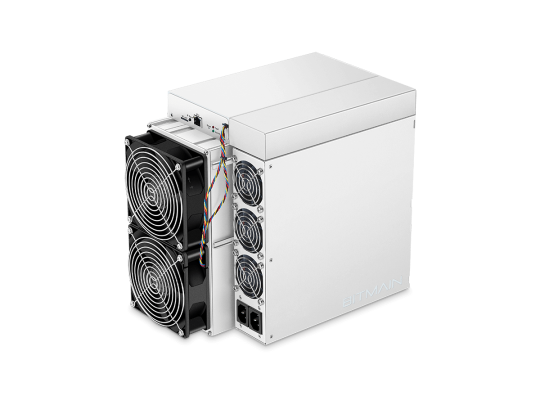
The D7 currently stands as the premier dash miner available to commercial operations. It commands a massive performance lead over previous generations. The unit delivers a baseline specification of 1286 GH/s while drawing 3148 watts of power. This configuration yields a highly favorable energy efficiency ratio (J/GH). High efficiency extends the functional lifespan of the machine, keeping it profitable even when network difficulty spikes.
Here are the core performance metrics defining its dominance:
Algorithm: X11 (Primarily Dash)
Hash Rate: 1286 GH/s (±5%)
Power Consumption: 3148W (±10%)
Power Efficiency: 2.45 J/GH
It outpaces legacy x11 miner models by producing exponentially more hashes per watt. Institutional operators gravitate toward X11 mining to diversify their digital asset portfolios. Heavy reliance on SHA-256 (Bitcoin) exposes operations to single-asset volatility. Adding X11 provides a structural hedge. Deploying high-efficiency units at scale allows enterprises to capture a larger percentage of block rewards while maintaining predictable energy overhead.
However, market realities dictate a harsh lesson. Acquiring the hardware is only step one. The true bottleneck is almost always securing viable, scalable power infrastructure. Without a reliable power source, a warehouse full of high-performance machines generates zero revenue.
CAPEX vs. OPEX: Modeling True ROI for the D7
Accurate financial modeling requires a clear separation of capital expenditures (CAPEX) and operational expenditures (OPEX). Sourcing the antminer d7 involves upfront capital. Operators must navigate direct manufacturer orders or accept secondary market premiums. Bulk shipping logistics, customs brokerage, and import tariffs further inflate initial costs. Still, these upfront expenses represent only a fraction of the lifetime outlay.
OPEX dominates the profitability equation. A machine pulling over 3000 watts demands uninterrupted, cheap electricity. Securing a sub-$0.07/kWh rate is practically mandatory for long-term viability. Beyond raw electricity, hidden OPEX items erode profit margins. You must budget for specialized firmware management, routine component degradation, and ongoing pool fees.
Investors often make the mistake of using static calculators. Real-world projections require dynamic ROI variables. Coin price and network difficulty constantly fluctuate. You must build a conservative baseline model rather than relying on today’s optimistic snapshot. Furthermore, you need to factor in hardware depreciation. The secondary market value of any asic miner drops significantly as newer generations launch.
Static vs. Dynamic ROI Modeling Comparison | ||
Modeling Variable | Static Calculator Approach | Dynamic Enterprise Approach |
|---|---|---|
Network Difficulty | Assumes difficulty remains at current levels indefinitely. | Models historical upward difficulty curves (e.g., +2% monthly). |
Hardware Value | Treats initial CAPEX as a sunk cost with zero residual value. | Factors in periodic depreciation and estimated exit liquidity. |
Operational Uptime | Assumes 100% hash rate delivery 24/7. | Models 95-98% uptime, accounting for repairs and curtailment. |
Energy Rates | Uses a fixed fiat rate per kWh. | Accounts for seasonal rate changes and peak demand surcharges. |
Why Institutional Hosting Outperforms In-House Deployment
Standard commercial real estate is rarely equipped for industrial cryptography operations. A 3000W+ mining rig pulls massive amperage. Standard office or warehouse breakers will trip immediately. Upgrading transformers, installing three-phase power, and retrofitting high-capacity electrical panels require massive capital. Furthermore, thermal rejection requirements are extreme. The hardware converts almost all consumed electricity into heat. Traditional HVAC systems fail under this thermal load, requiring expensive specialized airflow engineering.
Enterprise hosting facilities eliminate these infrastructure limitations. They leverage immense economies of scale. Institutional hosts negotiate industrial Power Purchase Agreements (PPAs) directly with utility companies. They secure wholesale electricity rates entirely unavailable to mid-tier operators. This single advantage often determines operational survival during bear markets.
Uptime and maintenance agreements also play a crucial role. A robust Service Level Agreement (SLA) dictates facility responsibilities. The financial impact of 99% uptime versus 90% uptime is staggering over a multi-year deployment. Institutional facilities employ on-site technicians round the clock. They perform rapid hash board resets, execute fan replacements, and manage preventative dust mitigation. Minimal downtime translates directly into maximum block reward capture.
Risk Mitigation: Network Difficulty and Market Volatility
Every commercial deployment faces external risks. Analyzing the difficulty curve is essential. Historical data shows extreme X11 difficulty spikes whenever new hardware generations enter the network. As global hash rate increases, your slice of the block reward shrinks. You must stress-test your break-even timeline against aggressive difficulty projections. If your model only breaks even under current conditions, it will likely fail.
Regulatory and energy risks also require careful evaluation. You should assess the geopolitical stability of your chosen hosting location. Jurisdictions hostile to digital assets can force sudden shutdowns. Additionally, grid curtailment programs impact projected yields. Facilities often participate in demand-response initiatives. They shut down during peak grid demand to stabilize local infrastructure. While this secures lower baseline power rates, it pauses your production. You must model these offline hours into your yield projections.
Experienced operators implement robust hedging strategies. They do not simply hold all generated assets. Many utilize auto-liquidation protocols for mined Dash. Liquidating a set percentage of daily rewards covers fiat OPEX obligations. This strategy minimizes exposure to sudden crypto asset volatility and ensures you always have cash flow to pay facility invoices.
Vendor Evaluation: Selecting an Institutional Hosting Partner
Selecting the right partner is the most critical decision in your deployment strategy. A cheap facility with poor infrastructure will destroy your machines. You must conduct rigorous due diligence.
Facility Auditing: Review the site's Tier rating. Inspect their thermal management systems. The facility must utilize cold-aisle and hot-aisle containment to isolate exhaust heat. Check the ambient temperature baselines during peak summer months. High ambient temperatures lead to thermal throttling and premature component failure.
Contract Transparency: Read the fine print carefully. Watch out for hidden setup fees or ambiguous maintenance charges. Identify any early termination penalties. Ensure absolute transparency in power pass-through costs. The contract should clearly state whether you pay a fixed all-in rate or a floating utility rate plus a management fee.
Security and Compliance: Verify physical security measures, including armed guards, biometric access, and continuous camera surveillance. Request proof of insurance policies covering client-owned hardware against fire, theft, and natural disasters. Finally, ensure the facility complies strictly with local electrical and fire codes to prevent regulatory shutdowns.
Hosting SLA Evaluation Matrix | ||
Criteria | Red Flags (Avoid) | Institutional Standard (Target) |
|---|---|---|
Uptime Guarantee | No financial penalty for host if uptime drops below 90%. | 98%+ guaranteed uptime with prorated energy credits for downtime. |
Maintenance Response | "Best effort" response time, handled remotely off-site. | SLA mandates under 4-hour physical technician intervention. |
Insurance Coverage | Host claims zero liability for hardware damage or loss. | Comprehensive policy covering replacement value of hardware. |
Conclusion
Successful large-scale deployment relies less on the machine's theoretical output and more on rigorous OPEX management. Evaluating a project solely on laboratory hash rates ignores the harsh realities of commercial energy consumption and thermal dynamics. The X11 algorithm offers strong diversification, but only for those who model risks correctly.
To navigate this landscape, prioritize transparent hosting SLAs over cheap, unverified facilities. Build your decision framework around conservative difficulty projections rather than best-case scenario calculators. Plan for hardware depreciation, incorporate demand-response curtailment into your models, and execute strict hedging strategies to cover recurring fiat costs.
Stop relying on static calculators. Request a custom hosting quote or ROI projection based on current energy rates and your specific deployment volume to secure long-term profitability.
FAQ
Q: What is the realistic lifespan of an Antminer D7 in a hosted environment?
A: A unit can last 3 to 5 years physically if maintained in an environment with strict thermal management and regular dust mitigation. However, economic obsolescence usually occurs sooner. As network difficulty rises and more efficient machines enter the market, the unit eventually costs more in electricity than it generates in block rewards.
Q: How does grid curtailment affect my X11 mining ROI?
A: Curtailment pauses your hash rate during peak grid demand, temporarily stopping revenue generation. Institutional hosts participate in these demand-response programs to stabilize local grids. In exchange, they receive heavily subsidized overall power rates. The long-term savings on electricity typically outweigh the short-term loss of block rewards.
Q: Is it more profitable to host my D7 or mine at a commercial property I already own?
A: Hosting is generally superior. Retrofitting an owned commercial property requires massive capital for high-voltage transformers and specialized HVAC containment. Institutional hosting offers a plug-and-play solution with immediate access to industrial power rates. Unless your property already possesses heavy industrial electrical and cooling infrastructure, retrofitting costs will destroy your ROI timeline.



Shenzhen OB Technology Co., Ltd. We are leading manufacturer in China which specialized electronic products supplying for 10 years.
SHOP
Graphics Cardadaphics
SUPPORT
Subscribe to receive updates, access to exclusive deals, and more.
