


AirPods Max Headphones: Apple Over Ear Wireless Headset
Views: 0 Author: Site Editor Publish Time: 2026-06-12 Origin: Site


Stepping into high-end personal audio requires serious thought. Choosing the right gear is a major investment rather than a quick impulse buy. You must balance the promise of seamless Apple ecosystem integration against a steep price tag and noticeable physical weight. Many buyers struggle to weigh cutting-edge computational audio against everyday wearability constraints.
Are they truly worth the hype for your specific lifestyle? We will provide an objective, evidence-based evaluation framework for this hardware. You will discover if this specific audio tool aligns smoothly with your daily workflow. We also explore your auditory requirements and long-term hardware durability expectations. By examining acoustic performance alongside real-world design trade-offs, you will gain the absolute clarity needed to make a confident purchasing decision.
Key Takeaways
**Best-in-Class Transparency Mode:** Remains the industry benchmark for environmental pass-through audio.
**Ecosystem Dependency:** Maximum ROI is heavily restricted to users fully embedded in the iOS/macOS hardware ecosystem.
**Physical Trade-offs:** The premium aluminum and stainless steel build results in a 384g weight, which introduces wearability constraints for extended sessions.
**Connectivity Updates:** Prospective buyers must evaluate the transition from Lightning to USB-C models when considering current retail inventory.
The Business Case for a Premium Audio Device: Who Should Upgrade?
You must distinguish your exact listening profile before upgrading. Casual listeners often prioritize convenience over pristine fidelity. Audiophiles typically seek lossless wired connections to enjoy uncompressed sound. Remote professionals require robust active noise cancellation (ANC) to block household distractions. A high-end premium audio device bridges several of these gaps beautifully. Understanding your primary use case prevents buyer's remorse.
Justifying the high cost means evaluating your daily usage hours closely. You need to calculate how often you wear them. Quick ecosystem switching speed between an iPhone and a Mac adds major productivity value. You save minutes every day bypassing Bluetooth pairing menus. Microphone clarity for virtual meetings also plays a massive role in determining your return on investment. Crisp voice transmission during remote calls justifies a higher premium tier.
Sometimes a lighter plastic-build alternative represents a more logical investment. Competitors like Sony or Bose offer excellent over ear headphones at significantly lower weights. These alternatives reduce neck fatigue during lengthy work sessions. Alternatively, an in-ear solution like a compact wireless headset provides strong portability. In-ear options make sense if bulky metal frames bother you on daily commutes.
Acoustic Performance and Computational Audio Verification
The active noise cancellation architecture utilizes an advanced eight-microphone array system. These microphones continuously sample ambient sound in real time. The computational system expertly neutralizes low-frequency hums like airplane engines or loud HVAC units. High-frequency transient noises, however, occasionally pierce the ANC barrier. Crying babies or sudden sirens might still bleed through the acoustic seal slightly. You should set realistic expectations regarding sudden loud noises.
Transparency Mode remains a massive selling point for this hardware. The zero-latency processing eliminates the frustrating "muffled" effect common in competing products. You hear your surroundings naturally. It feels as if you removed the ear cups entirely. This feature excels when you need spatial awareness during office conversations or airport announcements.
Dynamic head tracking creates a highly immersive theater-like experience. This Spatial Audio feature shines brightly during media consumption. Watching movies on Apple TV+ using Dolby Atmos feels incredibly expansive. It also adds immense practical value for FaceTime and virtual conferencing. Voices appear to originate from specific spots on your screen. This directional audio reduces cognitive load during lengthy remote meetings.
We must address the harsh realities of audio fidelity. Bluetooth technology simply lacks true high-res lossless support. The bandwidth cannot carry uncompressed files perfectly over the air. Even wired listening via official dongles introduces frustrating analog-to-digital conversion limitations. Purists seeking flawless uncompressed sound will definitely notice this technical ceiling.
Hardware Durability and Long-Term Wearability Risks
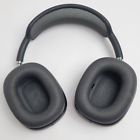
Apple intentionally chose anodized aluminum cups and a stainless steel frame. These premium materials deliver distinct durability benefits over typical polycarbonate designs. They resist cracking and survive minor drops exceptionally well. However, this material science creates a heavy 384g weight penalty. You carry roughly 130g more than you would using primary plastic competitors. If you wear airpods max headphones all day, this heft introduces noticeable fatigue. Neck strain becomes a real factor during marathon listening sessions.
The innovative knit mesh canopy attempts to mitigate this heavy burden. It distributes the weight mechanics evenly across your head. Breathability remains excellent compared to thick leather headbands. Still, the magnetic ear cushions require ongoing cleaning and maintenance. Replacing these specific cushions adds periodic costs to your entertainment budget. Over time, the mesh canopy may also stretch, reducing its structural support.
We must acknowledge the widely reported condensation phenomenon. Moisture buildup occasionally occurs inside the cold aluminum ear cups. This happens naturally during extended wear or rapid temperature shifts. Realistic risk assessment suggests wiping the cups down after prolonged sessions. Removing the magnetic cushions and drying the interior prevents internal hardware damage. You should avoid wearing them in highly humid environments entirely.
Ecosystem Integration and Implementation Constraints
The proprietary H1 chip provides massive workflow advantages. You get intuitive one-tap setup straight out of the box. Automatic device switching lets you bounce between a MacBook and an iPhone effortlessly. Audio Sharing allows two different users to stream from the exact same Apple device. These features define the frictionless magic of the ecosystem.
Clarifying functionality loss across different platforms is essential. Pairing the Apple AirPods Max with Android or Windows devices strips away essential features. You lose Spatial Audio capabilities immediately. Firmware update inability also plagues non-Apple users. The seamless auto-switch functionality completely disappears. They effectively become standard, restricted Bluetooth headphones on these alternative operating systems.
Apple claims 20 hours of battery life under real-world ANC and Spatial Audio loads. Independent testing confirms this metric holds up surprisingly well. The controversial Smart Case, however, remains a point of heavy critique. You cannot find a physical power button anywhere on the device itself. Instead, you rely entirely on an ultra-low-power mode when storing them inside the sleeve.
Feature | Apple Ecosystem (iOS/macOS) | Alternative OS (Android/Windows) |
|---|---|---|
One-Tap Setup | Available instantly | Manual Bluetooth pairing required |
Spatial Audio | Full Dolby Atmos head tracking | Completely disabled |
Firmware Updates | Automatic background updates | Impossible without an Apple device |
Device Switching | Seamless auto-switching | Manual disconnection required |
Purchasing Strategy: Navigating Variations and Warranties
Supply chain revisions recently introduced noticeable connectivity differences. Prospective buyers must decide whether to seek discounted Lightning inventory or pay full retail for the USB-C standard. Adopting USB-C provides significantly better long-term charging convenience across your entire tech arsenal. Lightning models often hit deep discount bins, making them tempting for budget-conscious buyers.
Evaluate the absolute necessity of extended warranty coverage carefully. Complex computational audio hardware carries inherent failure risks. Battery degradation naturally occurs over a standard two to three year lifecycle. Securing AppleCare+ mitigates these expensive out-of-warranty repair risks. Accidental damage claims become vastly cheaper with this active coverage in place.
High capital expenditure deters many casual buyers upfront. Leveraging carrier financing through major providers like T-Mobile or AT&T softens the financial blow. Retailer bundles also frequently offset the initial sticker shock. Check out these varied pathways to make the steep investment more manageable month to month.
Here are the primary steps to finalize your purchasing strategy:
Compare current retail discounts on older Lightning inventory against MSRP USB-C models.
Calculate the extra cost of adding AppleCare+ into your initial upfront budget.
Investigate carrier financing promotions to split the heavy payment into manageable monthly segments.
Verify the exact return window from your chosen retailer in case the physical weight proves unbearable.
Conclusion
We can easily pinpoint the exact scenario where buying this headset proves correct. Heavy Apple ecosystem users who prioritize premium build quality will genuinely love them. If you value Transparency mode immensely and remain unbothered by heavy physical weight, these belong on your desk. They elevate remote work and solitary media consumption brilliantly.
We must provide a definitive reason to skip this purchase entirely. Do not buy them if you require pure wired lossless audio. Skip them if you intend to use them primarily at the gym. Avoid them entirely if you use Android or Windows devices daily. The feature loss on alternative platforms severely diminishes their value proposition.
Take immediate action by checking current local stock for your preferred connector type. Decide firmly between the discounted Lightning revision or the modern USB-C version. Finally, evaluate AppleCare+ pricing to protect your high-end investment long term.
FAQ
Q: Can you use the AirPods Max wired for lossless audio?
A: No. Analog-to-digital conversion limitations prevent pure lossless playback. Even utilizing the official $35 audio cable does not support uncompressed lossless audio from Apple Music. You will always experience a digitized signal rather than pure analog fidelity.
Q: Are AirPods Max headphones sweat or water-resistant?
A: No. They carry no official IP rating for water or sweat resistance. They are highly unsuitable for intense gym workouts. Moisture damage from sweat easily harms the internal computational hardware and voids standard warranties.
Q: Does the Smart Case actually save battery?
A: Yes, but imperfectly. The case forces the internal hardware into low-power and ultra-low-power states. Battery drain still occurs slowly when stored. Because there is no physical off switch, your battery will inevitably deplete over several days of non-use.
Q: Is the weight of the Apple AirPods Max noticeable?
A: Yes. At 384g, they are statistically heavy for the consumer category. The innovative knit mesh canopy attempts to distribute this weight to mitigate top-of-head fatigue. However, users commonly feel noticeable neck strain during multi-hour listening sessions.



Shenzhen OB Technology Co., Ltd. We are leading manufacturer in China which specialized electronic products supplying for 10 years.
SHOP
Graphics Cardadaphics
SUPPORT
Subscribe to receive updates, access to exclusive deals, and more.
